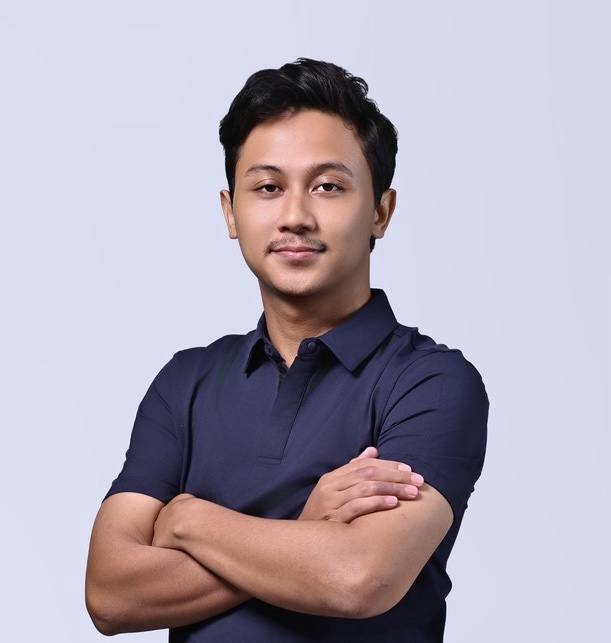
Fathin Difa Robbani
Independent Researcher
LLM Human Simulation & Computational Social Science
Jakarta, Indonesia
About me
I study how large language models (LLMs) can become faithful simulators of human behavior, such as survey responses, by capturing the heterogeneity of real populations rather than merely producing human-like answers.
Trained in both Sociology and Computer Science, I work at the intersection of computational social science, NLP, and mechanistic interpretability. My current work examines how LLMs internally represent demographic identity. I find that some of these representations mirror the structure of real survey data, yet do not drive the model's outputs: there is a gap between what a model represents and what it uses. I aim to close this gap by developing training objectives and models that recover real differences between social groups.
- LLM-based human simulation
- Computational social science
- Public opinion & survey methodology
- Mechanistic interpretability
- Calibration
-
Master of Computer Science (Artificial Intelligence), 2025
Gadjah Mada University · GPA 3.98/4.00
-
Bachelor of Social Science (Sociology), 2023
Gadjah Mada University · Computational Social Science focus
Publications
Individual attention heads encode group identity in a way that matches real-world opinion structure across 169 intersectional groups, yet causal interventions show that the model's outputs rely on one of the least faithful pathways, which can push answers away from survey truth.
Attributes the emergence of language identity to attention vs. MLP sublayers using Shapley values, with language directions recovered from two independent sources and calibrated against random-direction baselines.
Research Experience
-
Independent Researcher, LLM Human SimulationReadable, Faithful, Used [P1]
- Asked why LLM survey simulators produce homogeneous, unfaithful group answers. Used representational similarity analysis against Pew ATP ground truth across 169 intersectional demographic groups to score 1,089 read-out locations in Mistral-7B.
- Found individual attention heads whose representations of group identity match real-world opinion structure (selection-corrected ρ up to 0.63), beating the standard residual read-out and a lexical baseline. The finding replicates at a family-specific address in Qwen3-8B.
- Showed through layer-wise causal interventions that causal use does not follow fidelity. The strongest causal pathway sits in one of the least faithful attribute types (exact p = 0.002), and a donor-control experiment shows it can push outputs away from survey truth.
- Released a fully reproducible pipeline: the main causal statistics can be re-run on CPU from the shipped data.
Group-Resolved Calibration In progress- Building on [P1]'s finding that group differences on individual survey questions are hard to recover from model representations, I am developing a training objective that directly targets how each group deviates from the population average, rather than matching group-level distributions as prior work does.
- Testing whether frozen probes can recover this signal or whether it requires fine-tuning (LoRA), to establish whether the signal is absent from the model or has simply never been trained for.
-
Collaborative Researcher, Multilingual LLM Interpretability
- Attributing the emergence of language identity to attention vs. MLP sublayers using Shapley values, which makes the attribution independent of execution order.
- Recovering language directions from two independent sources (residual differences between translation pairs; vocabulary-space unembedding rows), calibrated against random-direction baselines.
-
Deep Learning Researcher, Finshot Inc.
- Ran applied research on cross-domain face verification (selfie ↔ ID card) under scarce labels, using metric learning (Multi-Similarity, Circle, Triplet losses), synthetic data, and domain adaptation.
- Built PyTorch training and evaluation pipelines from scratch; raised real-world matching accuracy from ~70% to 94% (93% recall) through iterative, diagnosis-driven experimentation (ROC analysis, hard-negative mining).
-
Master's Thesis Research, Gadjah Mada University
- Applied adaptive meta-learner-based knowledge distillation to compress TP-GAN face frontalization while preserving downstream recognition quality.
-
Bachelor's Thesis Research, Gadjah Mada University
- Mapped the power struggle between actors over labor and investment issues in Indonesia's Omnibus Law, using social network analysis of Twitter data to identify opinion communities and influential actors. This was my first work on measuring public opinion computationally, and it led to my current research.
Industry Experience
-
Data Science Manager, WPP Media Indonesia (Unilever account)
- Lead data science for a major FMCG account. Built LLM agent infrastructure (MCP servers over a BigQuery warehouse, with a semantic safety layer) and a multimodal system for analyzing marketing creatives.
- Open-sourced distilled references: whatsapp-data-agent, lineage-anywhere.
-
Founding Engineer (part-time), Menilik.id
- Sole engineer building a multi-agent LLM system (LangGraph) that serves Indonesian-language hospital patients over WhatsApp.
Teaching
-
Data Science Lecturer, Purwadhika Digital Technology School
- Designed and taught a full curriculum (Python, SQL, statistics, visualization, machine learning) to career-switching adults; 100% of alumni employed within 3.5 months.